Deprecated: Method SplObjectStorage::attach() is deprecated since 8.5, use method SplObjectStorage::offsetSet() instead in /home/stayfamo/public_html/lighthouss.com/wp-content/plugins/better-wp-security/vendor-prod/pimple/pimple/src/Pimple/Container.php on line 177

Deprecated: Method SplObjectStorage::attach() is deprecated since 8.5, use method SplObjectStorage::offsetSet() instead in /home/stayfamo/public_html/lighthouss.com/wp-content/plugins/better-wp-security/vendor-prod/pimple/pimple/src/Pimple/Container.php on line 177

Deprecated: Method SplObjectStorage::attach() is deprecated since 8.5, use method SplObjectStorage::offsetSet() instead in /home/stayfamo/public_html/lighthouss.com/wp-content/plugins/better-wp-security/vendor-prod/pimple/pimple/src/Pimple/Container.php on line 177

Deprecated: Method SplObjectStorage::attach() is deprecated since 8.5, use method SplObjectStorage::offsetSet() instead in /home/stayfamo/public_html/lighthouss.com/wp-content/plugins/better-wp-security/vendor-prod/pimple/pimple/src/Pimple/Container.php on line 177

Deprecated: Method SplObjectStorage::attach() is deprecated since 8.5, use method SplObjectStorage::offsetSet() instead in /home/stayfamo/public_html/lighthouss.com/wp-content/plugins/better-wp-security/vendor-prod/pimple/pimple/src/Pimple/Container.php on line 177

Deprecated: Method SplObjectStorage::attach() is deprecated since 8.5, use method SplObjectStorage::offsetSet() instead in /home/stayfamo/public_html/lighthouss.com/wp-content/plugins/better-wp-security/vendor-prod/pimple/pimple/src/Pimple/Container.php on line 177

Deprecated: Method SplObjectStorage::attach() is deprecated since 8.5, use method SplObjectStorage::offsetSet() instead in /home/stayfamo/public_html/lighthouss.com/wp-content/plugins/better-wp-security/vendor-prod/pimple/pimple/src/Pimple/Container.php on line 177

Deprecated: Method SplObjectStorage::attach() is deprecated since 8.5, use method SplObjectStorage::offsetSet() instead in /home/stayfamo/public_html/lighthouss.com/wp-content/plugins/better-wp-security/vendor-prod/pimple/pimple/src/Pimple/Container.php on line 177

Deprecated: Method SplObjectStorage::attach() is deprecated since 8.5, use method SplObjectStorage::offsetSet() instead in /home/stayfamo/public_html/lighthouss.com/wp-content/plugins/better-wp-security/vendor-prod/pimple/pimple/src/Pimple/Container.php on line 177

Deprecated: Method SplObjectStorage::attach() is deprecated since 8.5, use method SplObjectStorage::offsetSet() instead in /home/stayfamo/public_html/lighthouss.com/wp-content/plugins/better-wp-security/vendor-prod/pimple/pimple/src/Pimple/Container.php on line 177

Deprecated: Method SplObjectStorage::attach() is deprecated since 8.5, use method SplObjectStorage::offsetSet() instead in /home/stayfamo/public_html/lighthouss.com/wp-content/plugins/better-wp-security/vendor-prod/pimple/pimple/src/Pimple/Container.php on line 177

Deprecated: Method SplObjectStorage::attach() is deprecated since 8.5, use method SplObjectStorage::offsetSet() instead in /home/stayfamo/public_html/lighthouss.com/wp-content/plugins/better-wp-security/vendor-prod/pimple/pimple/src/Pimple/Container.php on line 177

Deprecated: Method SplObjectStorage::attach() is deprecated since 8.5, use method SplObjectStorage::offsetSet() instead in /home/stayfamo/public_html/lighthouss.com/wp-content/plugins/better-wp-security/vendor-prod/pimple/pimple/src/Pimple/Container.php on line 177

Deprecated: Method SplObjectStorage::attach() is deprecated since 8.5, use method SplObjectStorage::offsetSet() instead in /home/stayfamo/public_html/lighthouss.com/wp-content/plugins/better-wp-security/vendor-prod/pimple/pimple/src/Pimple/Container.php on line 177

Deprecated: Method SplObjectStorage::attach() is deprecated since 8.5, use method SplObjectStorage::offsetSet() instead in /home/stayfamo/public_html/lighthouss.com/wp-content/plugins/better-wp-security/vendor-prod/pimple/pimple/src/Pimple/Container.php on line 177

Deprecated: Method SplObjectStorage::attach() is deprecated since 8.5, use method SplObjectStorage::offsetSet() instead in /home/stayfamo/public_html/lighthouss.com/wp-content/plugins/better-wp-security/vendor-prod/pimple/pimple/src/Pimple/Container.php on line 177

Warning: Cannot modify header information - headers already sent by (output started at /home/stayfamo/public_html/lighthouss.com/wp-content/plugins/better-wp-security/vendor-prod/pimple/pimple/src/Pimple/Container.php:177) in /home/stayfamo/public_html/lighthouss.com/wp-includes/feed-rss2.php on line 8
<br /> <b>Deprecated</b>: Using null as an array offset is deprecated, use an empty string instead in <b>/home/stayfamo/public_html/lighthouss.com/wp-content/plugins/wordpress-seo/src/memoizers/meta-tags-context-memoizer.php</b> on line <b>135</b><br /> <br /> <b>Deprecated</b>: Using null as an array offset is deprecated, use an empty string instead in <b>/home/stayfamo/public_html/lighthouss.com/wp-content/plugins/wordpress-seo/src/memoizers/presentation-memoizer.php</b> on line <b>49</b><br /> <br /> <b>Deprecated</b>: Using null as an array offset is deprecated, use an empty string instead in <b>/home/stayfamo/public_html/lighthouss.com/wp-content/plugins/wordpress-seo/src/memoizers/presentation-memoizer.php</b> on line <b>63</b><br /> <br /> <b>Deprecated</b>: Using null as an array offset is deprecated, use an empty string instead in <b>/home/stayfamo/public_html/lighthouss.com/wp-content/plugins/wordpress-seo/src/memoizers/presentation-memoizer.php</b> on line <b>66</b><br /> <br /> <b>Deprecated</b>: Using null as an array offset is deprecated, use an empty string instead in <b>/home/stayfamo/public_html/lighthouss.com/wp-content/plugins/wordpress-seo/src/memoizers/meta-tags-context-memoizer.php</b> on line <b>154</b><br /> <br /> <b>Deprecated</b>: Using null as an array offset is deprecated, use an empty string instead in <b>/home/stayfamo/public_html/lighthouss.com/wp-content/plugins/wordpress-seo/src/memoizers/meta-tags-context-memoizer.php</b> on line <b>157</b><br /> Bible Study Tours Through the British Museum & National Gallery I help people discover the Bible in a new and exiting way by connecting artifacts and paintings to verses in the British Museum and National Gallery Tue, 16 Jun 2026 21:49:16 +0000 en-US hourly 1 https://wordpress.org/?v=7.1
Deprecated: Using null as an array offset is deprecated, use an empty string instead in /home/stayfamo/public_html/lighthouss.com/wp-content/plugins/wordpress-seo/src/memoizers/meta-tags-context-memoizer.php on line 135

Deprecated: Using null as an array offset is deprecated, use an empty string instead in /home/stayfamo/public_html/lighthouss.com/wp-content/plugins/wordpress-seo/src/memoizers/meta-tags-context-memoizer.php on line 157
Ashurnasirpal II, Assyrian Empire Builder https://lighthouss.com/ashurnasirpal-ii-assyrian-empire-builder/ https://lighthouss.com/ashurnasirpal-ii-assyrian-empire-builder/#respond Tue, 25 Feb 2025 17:52:46 +0000 https://lighthouss.com/?p=1402 Ashurnasirpal II was a very powerful Assyrian king in the early to mid 800s BC (reigned 883BC – 859BC). He is not directly connected to the Bible but he and his son Shalmaneser III (reigned 859BC – 824BC) ruled Assyria for almost 60 years, building it into the war machine that would dominate the area […]

The post Ashurnasirpal II, Assyrian Empire Builder appeared first on Bible Study Tours Through the British Museum & National Gallery.

]]>

Deprecated: Case statements followed by a semicolon (;) are deprecated, use a colon (:) instead in /home/stayfamo/public_html/lighthouss.com/wp-content/plugins/jet-elements/includes/addons/jet-elements-lottie.php on line 519

Deprecated: Case statements followed by a semicolon (;) are deprecated, use a colon (:) instead in /home/stayfamo/public_html/lighthouss.com/wp-content/plugins/jet-elements/includes/addons/jet-elements-lottie.php on line 523

Deprecated: Using null as an array offset is deprecated, use an empty string instead in /home/stayfamo/public_html/lighthouss.com/wp-content/plugins/jet-engine/includes/components/blocks-views/dynamic-content/manager.php on line 113
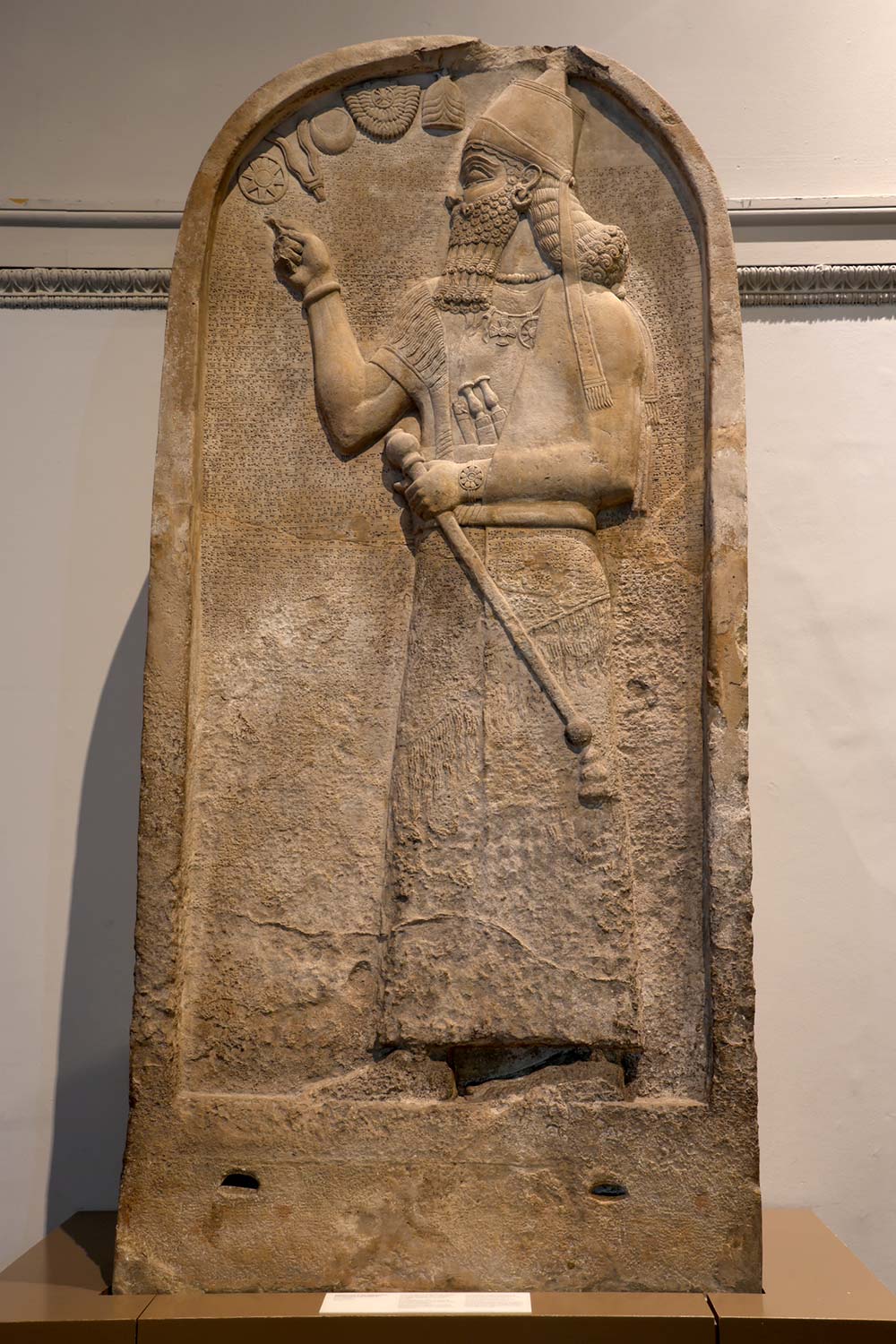
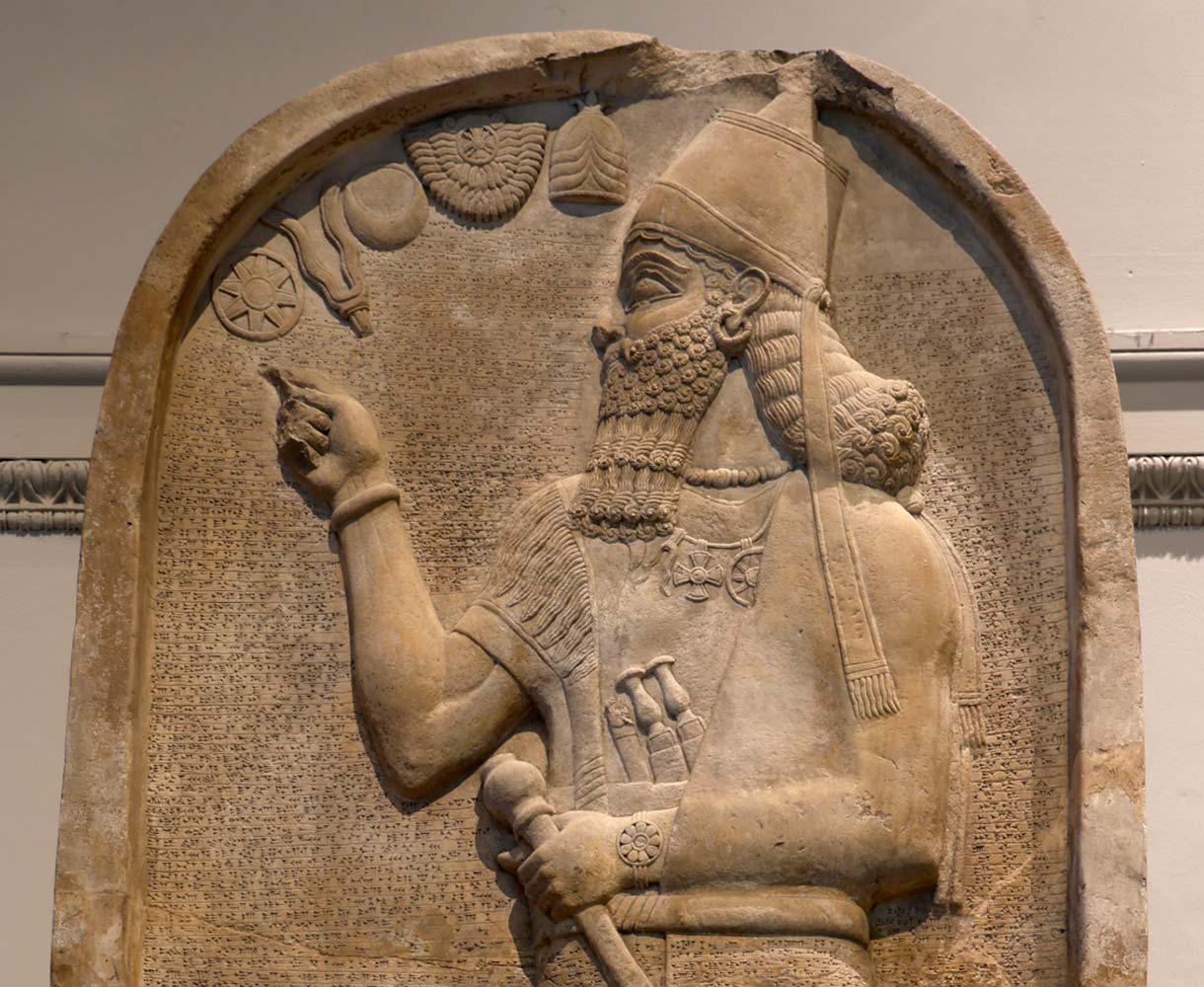
Ashurnasirpal II

Ashurnasirpal II was a very powerful Assyrian king in the early to mid 800s BC (reigned 883BC – 859BC). He is not directly connected to the Bible but he and his son Shalmaneser III (reigned 859BC – 824BC) ruled Assyria for almost 60 years, building it into the war machine that would dominate the area known as Mesopotamia, modern-day Iraq. The British Museum considers the Assyria of 900BC – 600 BC to be the world’s first empire, where an empire is one person or government ruling over multiple countries.

Ashurnasirpal can be translated as “Ashur is the guardian of the heir“. Ashur is the top god of the Assyrian pantheon. Thus, the king’s name invokes the protection of this most important god. All ancient kings had the name of a god in their name.

The king stands before five symbols of his gods. His right hand is in the gesture of a finger snap as a sign of respect. From left to right, the gods are:

  1. Ishtar: goddess of love and war, represented by a wheel (actually, a star)
  2. Adad: storm god, represented by a lightning fork
  3. Sin: moon god, represented by a crescent moon
  4. Shamash: sun god, represented by a winged disk emanating rays
  5. Ashur: war god, represented by a horned helmet
Ashurnasirpal II

Additional symbols of the gods hang around his neck including the moon god (partial crescent moon), storm god (lightning fork), sun god (Maltese cross) and the love and war goddess (partial star). He wears a symbol of a flower on his left wrist, which stands for protection and good luck. The pommels of two daggers are tucked into his cloak.

The Assyrians believed that the left side of the face was the inferior side, and that the right side was superior. Ashurnasirpal shows us his left side in order to demonstrate that he is inferior to the gods. In most of his imagery, when he faces people, especially enemies and lions, he shows the right side of his face, indicating that he is superior.

We see this right-hand dominance in the Bible where there are numerous references to right-handedness.

In Isaiah 41:10, God reassures Israel:

“So do not fear, for I am with you;
do not be dismayed, for I am your God.

I will strengthen you and help you;
I will uphold you with my righteous right hand.”

In Genesis 48, Joseph brings his sons Manasseh (older) and Ephraim (younger) to his father Jacob to be blessed. Manasseh is supposed to get the right hand while Ephraim is supposed to get the left hand. But instead, Jacob crosses his hands to bless Ephraim with his right hand and Manasseh with his left.

Joseph is unhappy with this but Jacob assures him that this is intentional.

Later on, the tribe of Ephraim became so prominent that it was the dominant tribe of the northern Kingdom of Israel. Isaiah prophesies,Ephraim’s jealousy will vanish, and Judah’s enemies will be destroyed; Ephraim will not be jealous of Judah, nor Judah hostile toward Ephraim.” in Isaiah 11:13. Ephraim stands for the entire northern kingdom.

The entire piece is covered with cuneiform, the writing of the day. When writing was first invented, scribes used a reed stylus on wet clay, imprinting wedges, triangles, diamonds and lines. This led to modern scholars labelling the writing as “cuneiform“, from the Latin for “wedge shaped“.

While the writing is called cuneiform, the language of Assyria was Akkadian, a popular language. Cuneiform was also used for the Sumerian and Old Persian languages.

The Akkadian language has been deciphered, and we can read King Ashurnasirpal’s inscriptions praising himself and documenting his actions.

At that time, my kingship, my dominion, (and) my power came forth at the command of the great gods. I am king, I am lord, I am praiseworthy, I am exalted, I am important, I am magnificent, I am foremost, I am a hero, I am a warrior, I am a lion, and I am virile…” Humility was not one of his strengths.

In other words, everything about him was positive, exceedingly positive, and nothing embarrassing.

Further down, he wrote: “I dyed the mountain red like red wool with their blood (and) the ravines (and) torrents of the mountain swallowed the rest of them. I carried off captives (and) possessions from them. I cut off the heads of their fighters (and) built (therewith) a tower before their city. I burned with fire their adolescent boys (and) girls.”

The Assyrian kings believed that all people had to obey the god Ashur. In order to demonstrate that obedience, they had to obey the king and if they were not obeying the king, they had to be forced to. Thus, the kings went out on campaign every year to force everyone to obey the king, and hence Ashur.  A lot of people died, at least according to the poetic inscriptions.

Of another campaign he wrote:  I brought back captives, possessions, oxen, (and) sheep from them (and) burned with fire their cities. I hung their heads on trees of the mountain (and) burned with fire their adolescent boys.”

In four of his campaigns, he uses the curious phrase, “grasp my feet”: “ [I massacred many of them, carried off prisoners (and) possessions from them, (and) burned with fire th(ose) cities]. The troops, [as many as had fled from my weapons, came down (and) grasped my feet. I imposed upon them corvée].”

Grasping the feet was the expression for bowing as low as possible so that the inferior person could hold on to the feet of the superior person.

This practice of going out on campaign every year for many years would build Assyria into the war machine that would dominate the area from 912BC to 612BC.

The extremely cruel violence was done to intimidate the surrounding countries into surrendering without a fight. News of this ferocity travelled far and wide. This psychological warfare ensured much less fighting and easier domination, at least in the short run.

Given how warlike they were, we can see why God would use Assyria to destroy the sinful and disobedient Kingdom of Israel.

The post Ashurnasirpal II, Assyrian Empire Builder appeared first on Bible Study Tours Through the British Museum & National Gallery.

]]>
https://lighthouss.com/ashurnasirpal-ii-assyrian-empire-builder/feed/ 0
Ashurbanipal, Assyrian Lion Hunter https://lighthouss.com/ashurbanipal-assyrian-lion-hunter/ https://lighthouss.com/ashurbanipal-assyrian-lion-hunter/#respond Thu, 25 Jul 2024 18:17:59 +0000 https://webredox.net/demo/wp/travol/small-group-tours-with-flights-from-the-usa-copy/ Assyrian King Ashurbanipal, the last great king of Assyria

The post Ashurbanipal, Assyrian Lion Hunter appeared first on Bible Study Tours Through the British Museum & National Gallery.

]]>

Deprecated: Using null as an array offset is deprecated, use an empty string instead in /home/stayfamo/public_html/lighthouss.com/wp-content/plugins/jet-engine/includes/components/blocks-views/dynamic-content/manager.php on line 113
Ashurbanipal

King Ashurbanipal was the last great Assyrian king, ruling 668 – 631 BC. He is mentioned in the Bible, Ezra 4:10, as either Ashurbanipal or Osnappar/Asnappar, depending on your translation. “Ashurbanipal” is the Akkadian form of the name while “Osnappar/Asnappar” is the Aramaic form. Ezra wrote the Aramaic.

His grandfather was Sennacherib, the infamous king who attacked King Hezekiah in Jerusalem after conquering Lachish, the second most important city of the Kingdom of Judah. According to 2 Kings 19:35, an angel of the Lord killed 185,000 Assyrian soldiers, which forced Sennacherib to go home, where he would be killed by his sons.

Ashurbanipal had a set of reliefs made of him killing lions. Lots of them. He did it as a royal sport, pest control, because lions were actually a problem killing people and animals and image building (he is more powerful than a lion).

His distant predecessor Ashurnasirpal II from the mid-800s BC claimed to have killed 450 lions, so lion killing was a long-held royal Assyrian tradition.

It is no wonder that when the prophet Nahum prophesied the fall of Assyria in Nahum 2, that he used the metaphor of a lion to represent Assyria.

After Ashurbanipal died, his successors ruled badly, and were conquered by the Babylonians in 609 BC.

The post Ashurbanipal, Assyrian Lion Hunter appeared first on Bible Study Tours Through the British Museum & National Gallery.

]]>
https://lighthouss.com/ashurbanipal-assyrian-lion-hunter/feed/ 0
Marduk-apla-iddina II, Babylonian King Who Possibly Allied with King Hezekiah https://lighthouss.com/marduk-apla-iddina-ii-babylonian-king-possibly-allied-king-hezekiah/ https://lighthouss.com/marduk-apla-iddina-ii-babylonian-king-possibly-allied-king-hezekiah/#respond Thu, 24 Nov 2022 22:40:23 +0000 https://lighthouss.com/?p=1342 Marduk-apla-iddina II, a minor Babylonian king, appears briefly in the Bible. He was a sufficiently strong enough leader to rule the independent city-state of Babylon in opposition to Assyria, the superpower of the day. He seized control of Babylon in 722 or 721 BC when Sargon II, the third of three Assyrian kings who wiped […]

The post Marduk-apla-iddina II, Babylonian King Who Possibly Allied with King Hezekiah appeared first on Bible Study Tours Through the British Museum & National Gallery.

]]>

Deprecated: Using null as an array offset is deprecated, use an empty string instead in /home/stayfamo/public_html/lighthouss.com/wp-content/plugins/jet-engine/includes/components/blocks-views/dynamic-content/manager.php on line 113

Marduk-apla-iddina II, a minor Babylonian king, appears briefly in the Bible. He was a sufficiently strong enough leader to rule the independent city-state of Babylon in opposition to Assyria, the superpower of the day.

He seized control of Babylon in 722 or 721 BC when Sargon II, the third of three Assyrian kings who wiped out the Kingdom of Israel (northern tribes), had just ascended the throne. Many historians suspect that Sargon had himself seized the throne, so it was, perhaps, this temporary power vacuum that gave Marduk-apla-iddina the opportunity to take over Babylon.

He remained a thorn in the side of Assyria until 710 BC, when Sargon finally forced him to flee. He waited for the next Assyrian king, Sennacherib, to take the throne in 705 BC, before retaking Babylon in 703 BC.

Unfortunately for him, his rule would last only nine months before Sennacherib forced him out in 702 BC. He lived in exile in the neighboring country of Elam for a few more years before dying around 694 BC.

Marduk-apla-iddina’s Biblical name varies among translations as Berodach-baladan (NASB, KJV), Marduk-Baladan (NIV) and Merodach-baladan (ESV). Not much is known about him, probably due to his rogue and rebellious behavior, which would not lend itself to being favorably preserved in the historical records.

Like numerous kings in ancient times, “Marduk-apla-iddina” includes the name of a major deity, in this case, Marduk. Marduk was an ancient Mesopotamian deity and patron deity of the city of Babylon. As Babylon rose in influence and power, so did Marduk. By the time of Marduk-apla-iddina, Marduk was the head of the Babylonian pantheon.

Marduk-apla-iddina means “Marduk has given an heir”.

It was during Marduk-apla-iddina’s second shorter reign that he diplomatically crossed paths with King Hezekiah of the Kingdom of Judah (southern tribes).

The Bible includes a brief passage (2 Kings 20, Isaiah 39) that details a visit by Marduk-apla-iddina’s envoys to Hezekiah after Hezekiah’s miraculous recovery from a terminal illness. Hezekiah shows the envoys everything in the palace, including the treasures, which earns him a rebuke from the prophet Isaiah for such an ostentatious display of wealth.

This visit resulted in two tragic consequences:

  1. Marduk-apla-iddina likely sought and received Hezekiah’s support in opposition to Assyria, which would then bring the Assyrian war machine to conquer 46 of the fortified cities of the Kingdom of Judah except for Jerusalem

  2. Word of Hezekiah’s wealth became known to the Assyrians, who would subsequently demand and receive a large payment for not attacking Jerusalem

King Hezekiah is described in the Bible as one of the most righteous kings but this did not prevent him from making foolish decisions.

This clay tablet, written in the Akkadian language using the cuneiform script, lists a number of plants in Marduk-apla-iddina’s garden.

https://www.britishmuseum.org/collection/object/W_1881-0706-688

These plants include: onions, garlic, leeks, lettuce, cucumbers and turnips, as well as herbs such as mint, cress, thyme and coriander. Also, a strangely-named “bird dung” plant.

Google Street View: https://artsandculture.google.com/streetview/british-museum/AwEp68JO4NECkQ?sv_lng=-0.1271190188573712&sv_lat=51.51991534680391&sv_h=243.43062774909055&sv_p=-39.633573827849986&sv_pid=pU2nCuZt1obI8bFs6dG_3w&sv_z=0.7851843257208053

A complete list can be found here:

https://www.reddit.com/r/ArtefactPorn/comments/249sdj/list_of_plants_in_a_royal_babylonian_garden_king/

The museum notes in the artifact display’s description that the “slave-girl buttock plant” remains unidentified.

Note: In the Bible, the account of Marduk-apla-iddina’s visit follows Sennacherib’s attack but it makes better sense if the visit preceded it. This better explains the reason for the attack and that Hezekiah would have a lot of treasures to give to Sennacherib. It is not known with certainty why the account follows the attack in the narration.

The post Marduk-apla-iddina II, Babylonian King Who Possibly Allied with King Hezekiah appeared first on Bible Study Tours Through the British Museum & National Gallery.

]]>
https://lighthouss.com/marduk-apla-iddina-ii-babylonian-king-possibly-allied-king-hezekiah/feed/ 0
Sennacherib, Assyrian King Who Attacked King Hezekiah in Jerusalem https://lighthouss.com/sennacherib-assyrian-king-attacked-king-hezekiah-jerusalem/ https://lighthouss.com/sennacherib-assyrian-king-attacked-king-hezekiah-jerusalem/#respond Tue, 13 Sep 2022 12:01:25 +0000 https://lighthouss.com/?p=1 Sennacherib is the most frequently-referenced Assyiran king in the Bible. He is best known in the Bible for losing 185,000 soldiers in his failed attempt to conquer Jerusalem. He was a contemporary of King Hezekiah of the Kingdom of Judah, the prophet Isaiah and the Egyptian Pharaoh Tirhaqa, also mentioned in the Bible in 2 Kings […]

The post Sennacherib, Assyrian King Who Attacked King Hezekiah in Jerusalem appeared first on Bible Study Tours Through the British Museum & National Gallery.

]]>

Deprecated: Using null as an array offset is deprecated, use an empty string instead in /home/stayfamo/public_html/lighthouss.com/wp-content/plugins/jet-engine/includes/components/blocks-views/dynamic-content/manager.php on line 113
King Sargon II with crown prince Sennacherib

Sennacherib is the most frequently-referenced Assyiran king in the Bible. He is best known in the Bible for losing 185,000 soldiers in his failed attempt to conquer Jerusalem.

He was a contemporary of King Hezekiah of the Kingdom of Judah, the prophet Isaiah and the Egyptian Pharaoh Tirhaqa, also mentioned in the Bible in 2 Kings 19:9.

He ruled for some 24 years, 705 – 681 BC, following a 17-year reign by his father Sargon II. He is the second ruler in the Sargonid dynasty. He was assassinated by two of his sons, and was succeeded by another son, Esarhaddon.

His notable achievements include moving the capital from Dur-Sharrukin (Fortress of Sargon), built by his father Sargon II, to Nineveh, a vast building project. He conducted a number of successful military campaigns. He also destroyed the city of Babylon in 689 BC after repeated rebellions, one of which had resulted in the execution of his vassal king, one of his sons.

The defeated king of one of the Babylonian rebellions was Marduk-apla-iddina, referred to in 2 Kings 20 and Isaiah 39 as Merodach Baladan.

Sennacherib invaded the Kingdom of Judah (also known as the southern tribes) after his predecessors, Tiglath-Pileser III, Shalmaneser V and Sargon II, wiped out the Kingdom of Israel (also known as the northern tribes). The attack was in response to Hezekiah’s rebellion against Assyria, and his subsequent reliance on Egypt for help.

In Isaiah 8:5-8, God tells the prophet Isaiah that because the people of the Kingdom of Judah have rejected him, he will bring the mighty Assyrians, depicted as flood waters, against them.

Sennacherib would fulfill this prophecy by conquering 46 towns, fortresses and fortified cities including the fortified city of Lachish, second in size and importance only to Jerusalem. The prophet Micah warned the inhabitants of Lachish to flee the city, blaming them for inducing the nearby city of Jerusalem, and hence the Kingdom of Judah, to sin against God; see Micah 1:13.

The Assyrian victory over Lachish was depicted in a set of wall reliefs that first decorated Sennacherib’s palace in Nineveh and is now in the British Museum. Some of the scenes are quite gruesome.

After this successful battle, Sennacherib would lay siege to Jerusalem, the details of which are told in 2 Kings 18-19, Isaiah 36-37 and 2 Chronicles 32. The texts in 2 Kings and Isaiah are nearly identical but 2 Kings has a few more details. There is a debate over which account was written first.

While Sennacherib would boast, “Himself {Hezekiah] I made a prisoner in Jerusalem, his royal residence, like a bird in a cage”, he never entered Jerusalem. This statement is recorded on a six-sided baked clay document, the Taylor prism, which is also in the British Museum.

The reason for Sennacherib’s departure is unclear; the Bible implies that the loss of 185,000 men was the cause but it could have been another rebellion by Marduk-apla-iddina in Babylon that pulled him away. Also, 2 Kings 18 records that Hezekiah made a huge tribute payment to Sennacherib.

In 2 Kings 19:7, the prophet Isaiah tells King Hezekiah that Sennacherib will be cut down by the sword, which eventually happened in 681 BC.

https://www.britishmuseum.org/collection/object/W_1847-0702-1-2

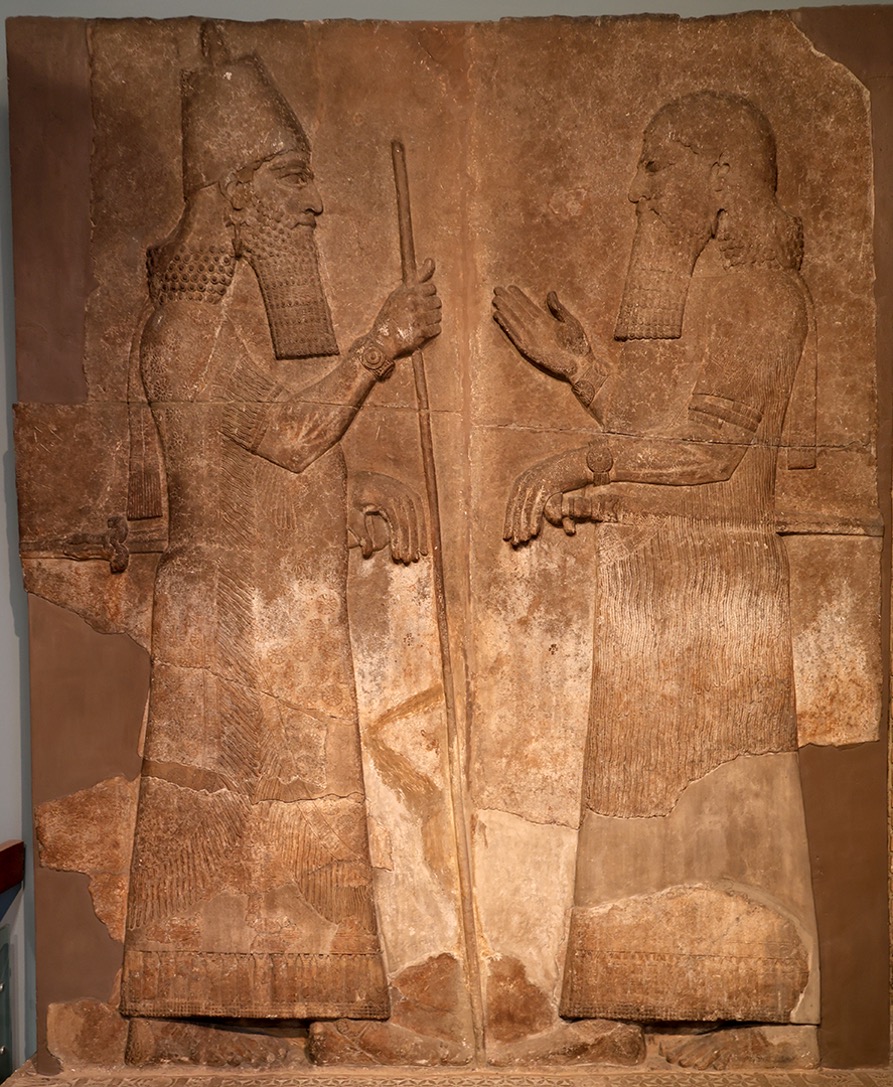
Sennacherib is most likely the young man on the right, facing his father, King Sargon II. As the crown prince, Sennacherib would succeed his father on the throne.

Also note the common Assyrian artistic practice of placing the superior person on the left, facing right, and the subordinate person on the right, facing left.

https://artsandculture.google.com/streetview/british-museum/AwEp68JO4NECkQ?sv_lng=-0.1276883751522462&sv_lat=51.51901289418876&sv_h=234.10116169646963&sv_p=1.376766755242798&sv_pid=PDvUT3E-UQc3jCudWThZ8Q&sv_z=1.0000000000000002

Famous English poet Lord Byron wrote a dramatic poem in 1815, The Destruction of Sennacherib, depicting Sennacherib’s loss on the battlefield:

https://www.poetrybyheart.org.uk/poems/the-destruction-of-sennacherib/

185,000 to 0 is most likely the most lopsided battle loss in the history of warfare. The atomic bomb killed up to 80,000 civilians at the time of the blast.

The post Sennacherib, Assyrian King Who Attacked King Hezekiah in Jerusalem appeared first on Bible Study Tours Through the British Museum & National Gallery.

]]>
https://lighthouss.com/sennacherib-assyrian-king-attacked-king-hezekiah-jerusalem/feed/ 0
Sargon II, Last of 3 Assyrian Kings to Wipe Out Kingdom of Israel https://lighthouss.com/sargon-ii-last-3-assyrian-kings-wipe-out-kingdom-israel/ https://lighthouss.com/sargon-ii-last-3-assyrian-kings-wipe-out-kingdom-israel/#respond Thu, 25 Aug 2022 16:06:08 +0000 https://webredox.net/demo/wp/travol/?p=187 Sargon II was the last of three Assyrian kings to attack the Northern Tribes (Kingdom of Israel) 732 – 722 BC. He succeeded his older brother, Shalmaneser V, and was himself succeeded by his son Sennacherib, the most prominently mentioned Assyrian king in the Bible. He was king for some 17 years, 722 – 705 […]

The post Sargon II, Last of 3 Assyrian Kings to Wipe Out Kingdom of Israel appeared first on Bible Study Tours Through the British Museum & National Gallery.

]]>

Deprecated: Using null as an array offset is deprecated, use an empty string instead in /home/stayfamo/public_html/lighthouss.com/wp-content/plugins/jet-engine/includes/components/blocks-views/dynamic-content/manager.php on line 113
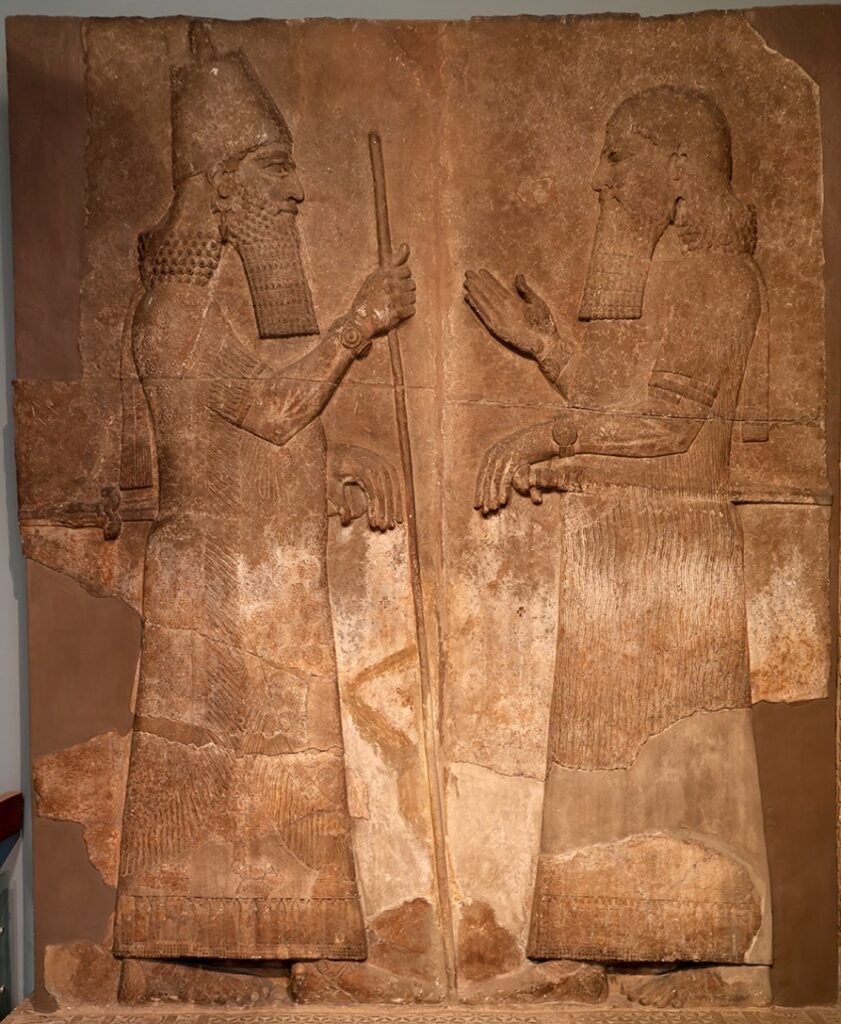
King Sargon II with crown prince Sennacherib

Sargon II was the last of three Assyrian kings to attack the Northern Tribes (Kingdom of Israel) 732 – 722 BC. He succeeded his older brother, Shalmaneser V, and was himself succeeded by his son Sennacherib, the most prominently mentioned Assyrian king in the Bible.

He was king for some 17 years, 722 – 705 BC, following a short five-year reign by his older brother. Historians note that since “Sargon” means “the faithful king” or “the legitimate king”, Sargon II must have overthrown his brother and usurped the throne, as no legitimate king would feel the need to give himself such a name.

His reign initiated a dynasty named after him, the Sargonid dynasty, with six of his descendants on the throne until Assyria’s demise in 609 BC.

Historians are divided as to whether Samaria, the capital of the Kingdom of Israel, was conquered twice, first by Shalmaneser V and then again by Sargon II, or once, in which Sargon finished off what Shalmaneser started.

2 Kings 17 credits Shalmaneser V as having conquered Samaria. In Assyrian records, Sargon II claims, “I besieged and conquered Samaria and led away as booty 27,290 inhabitants of it.” Either way, God used Assyria to punish the Kingdom of Israel by wiping it out and bringing non-Israelites to settle where the Northern Kingdom once was.

The intermingling of these non-Israelites with the remnant of Israelites would lead to the creation of the Samaritan people. These half-Israelite, half-non-Israelites were despised by the Jews in subsequent centuries down to the time of Jesus.

Samaritans figure prominently in the Parable of the Good Samaritan and in John 4, when Jesus talks to the Samaritan woman.

Unlike his brother Shalmaneser, Sargon was a warrior king, competent in both military and political affairs; he defeated or at least negotiated peace with his major enemies and rivals. He boosted Assyria’s domination over the region of Mesopotamia. Unfortunately, his habit of leading his troops into battle would cost him his life.

Sargon completed the destruction of the Northern Tribes – they would never return to their homeland, and their lineages would die out and be lost to history forever. Israel was now reduced to the Kingdom of Judah.

Sargon is mentioned only once by name in Isaiah 20:1, where Isaiah the prophet records his defeat of the small country of Ashdod, which was historically inhabited by the Philistines. This Assyrian victory prompted Isaiah to prophesy that Assyria will defeat Egypt and Cush (modern day Ethiopia), which in turn warned the Kingdom of Judah away from relying on the two countries for help against Assyria.

https://www.britishmuseum.org/collection/object/W_1847-0702-1-2

Sargon is on the left, facing a younger man who is most likely his son Sennacherib, the crown prince, who will succeed him as king.

Also note the common Assyrian practice of placing the superior person on the left, facing right, and the subordinate person on the right, facing left.

https://artsandculture.google.com/streetview/british-museum/AwEp68JO4NECkQ?sv_lng=-0.1276883751522462&sv_lat=51.51901289418876&sv_h=234.10116169646963&sv_p=1.376766755242798&sv_pid=PDvUT3E-UQc3jCudWThZ8Q&sv_z=1.0000000000000002

The post Sargon II, Last of 3 Assyrian Kings to Wipe Out Kingdom of Israel appeared first on Bible Study Tours Through the British Museum & National Gallery.

]]>
https://lighthouss.com/sargon-ii-last-3-assyrian-kings-wipe-out-kingdom-israel/feed/ 0
Shalmaneser V, Assyrian King who Helped Destroy Kingdom of Israel https://lighthouss.com/shalmaneser-v-assyrian-king-helped-destroy-kingdom-israel/ https://lighthouss.com/shalmaneser-v-assyrian-king-helped-destroy-kingdom-israel/#respond Wed, 10 Aug 2022 16:16:05 +0000 https://webredox.net/demo/wp/travol/practical-information-for-traveling-to-egypt-copy/ Deprecated: Using null as an array offset is deprecated, use an empty string instead in /home/stayfamo/public_html/lighthouss.com/wp-content/plugins/jet-engine/includes/components/blocks-views/dynamic-content/manager.php on line 113
In this relief, Shalmaneser V, the crown prince, faces his father Tiglath-Pileser III, whose foot rests firmly on an enemy’s neck. Shalmaneser V was the second of three Assyrian kings to attack the Northern Tribes (Kingdom of Israel) 732 – 722 BC. He succeeded his father, Tiglath-Pileser III (sometimes called “Pul” in the Bible). He […]

The post Shalmaneser V, Assyrian King who Helped Destroy Kingdom of Israel appeared first on Bible Study Tours Through the British Museum & National Gallery.

]]>

Deprecated: Using null as an array offset is deprecated, use an empty string instead in /home/stayfamo/public_html/lighthouss.com/wp-content/plugins/jet-engine/includes/components/blocks-views/dynamic-content/manager.php on line 113
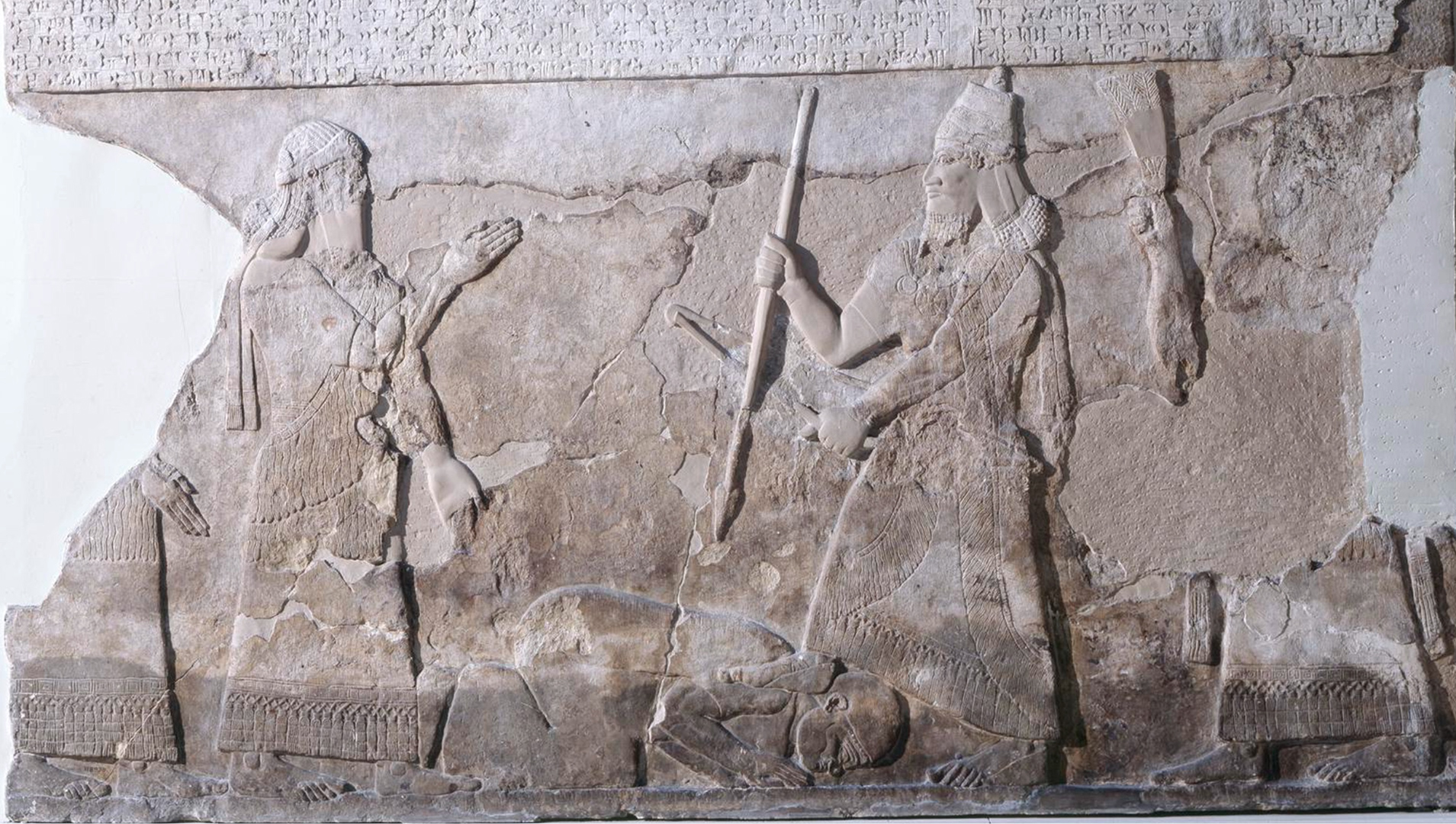
In this relief, Shalmaneser V, the crown prince, faces his father Tiglath-Pileser III, whose foot rests firmly on an enemy’s neck.

Shalmaneser V was the second of three Assyrian kings to attack the Northern Tribes (Kingdom of Israel) 732 – 722 BC. He succeeded his father, Tiglath-Pileser III (sometimes called “Pul” in the Bible).

He reigned only five years, 727 – 722 BC, before he died under mysterious circumstances. A younger brother, Sargon II, succeeded him. Historians note that since “Sargon” means “the faithful king” or “the legitimate king”, Sargon II must have usurped the throne, as no legitimate king would feel the need to give himself such a name.

Historians are divided as to whether Samaria, the capital of the Kingdom of Israel, was conquered twice, first by Shalmaneser V and then again by Sargon II, or once in which Sargon finished off what Tiglath-Pileser III and Shalmaneser V started.

2 Kings 17 credits Shalmaneser V as having conquered Samaria. In Assyrian records, Sargon II claims, “I besieged and conquered Samaria and led away as booty 27,290 inhabitants of it.” Either way, God used Assyria to punish the Kingdom of Israel by wiping it out and bringing non-Israelites to settle where the Northern Kingdom once was.

The intermingling of these non-Israelites with the remnant of Israelites would lead to the creation of the Samaritan people. These half-Israelite, half-non-Israelites were despised by the Jews in subsequent centuries down to the time of Jesus.

Samaritans figure prominently in the Parable of the Good Samaritan and in John 4, when Jesus talks to the Samaritan woman. Luke 9:51-54 narrates a strong Jewish reaction to being rejected by a Samaritan village.

Assyrians had a well-known fondness for lions in their sculptures, notably the colossal statues that guarded the palace and temple entrances, and the reliefs depicting their slaughter by a later Assyrian king, Ashurbanipal (Akkadian language version of the name), (Osnapper in NASB, ESV, which is the Aramaic form of the name and the word Ezra wrote). He reigned from 669 to 631 BC and was mentioned in Ezra 4:10.

Ishtar, a goddess whom the Assyrians associated with war and physical love, was also the goddess of rain and thunderstorms. Her symbol was the lion and her thunder was its roar.

The prophet Nahum prophesied against Assyria, condemning it for its wickedness. In Nahum 2:11-12, he mocks the nation: “Where now is the lions’ den, the place where they fed their young, where the lion and lioness went, and the cubs, with nothing to fear? The lion killed enough for his cubs and strangled the prey for his mate, filling his lairs with the kill and his dens with the prey.”

This Assyrian lion measuring weight was used to ensure fair trade and was made during the reign of Shalmaneser V: https://www.britishmuseum.org/collection/object/W_1848-1104-67

Google Street View:

https://artsandculture.google.com/streetview/british-museum/AwEp68JO4NECkQ?sv_lng=-0.1271776619027492&sv_lat=51.51984797650206&sv_h=90.95736656334628&sv_p=-41.465963338761874&sv_pid=PaMNGEXhKFA6iZGof0oQWA&sv_z=1

The post Shalmaneser V, Assyrian King who Helped Destroy Kingdom of Israel appeared first on Bible Study Tours Through the British Museum & National Gallery.

]]>
https://lighthouss.com/shalmaneser-v-assyrian-king-helped-destroy-kingdom-israel/feed/ 0
King Jehu, Kingdom of Israel https://lighthouss.com/king-jehu-kingdom-of-israel/ https://lighthouss.com/king-jehu-kingdom-of-israel/#respond Wed, 03 Aug 2022 18:08:15 +0000 https://webredox.net/demo/wp/travol/tips-towards-a-flawless-honeymoon-copy/ In 841BC, the Assyrian king, Shalmaneser III (not mentioned in the Bible) wanted to show off the immense size of his kingdom. He did so by documenting a series of tribute payment visits on a black obelisk. These tribute payments include expensive objects, money and exotic animals. The penalty for not bringing the annual tribute was […]

The post King Jehu, Kingdom of Israel appeared first on Bible Study Tours Through the British Museum & National Gallery.

]]>

Deprecated: Using null as an array offset is deprecated, use an empty string instead in /home/stayfamo/public_html/lighthouss.com/wp-content/plugins/jet-engine/includes/components/blocks-views/dynamic-content/manager.php on line 113
King Jehu

In 841BC, the Assyrian king, Shalmaneser III (not mentioned in the Bible) wanted to show off the immense size of his kingdom. He did so by documenting a series of tribute payment visits on a black obelisk.

These tribute payments include expensive objects, money and exotic animals. The penalty for not bringing the annual tribute was severe. Think protection money.

He selected five countries from the border of his empire to show how much space there was between these countries. Similar to saying California to New York or Washington to Florida.

What is particularly relevant is that King Jehu of the Kingdom of Israel (Divided Kingdom, Northern tribes) is shown on the second register:

https://www.britishmuseum.org/collection/object/W_1848-1104-1

In 2 Kings 9-10the prophet Elisha anoints Jehu as the next King of Israel, and commands him to purge the entire house of King Ahab, one of his predecessors. Ahab and his wife Jezebel were so wicked in their idolatry and persecution of the prophets that God wanted every male member of Ahab’s family to be killed.

Jehu would wind up killing the king of Israel and the king of Judah, as well as numerous sons.

King Jehu reigned for 28 years and during that time, he paid tribute to the dominant power, the nation of Assyria. It was either pay or get destroyed.

British Museum Street View: https://artsandculture.google.com/streetview/british-museum/AwEp68JO4NECkQ?sv_lng=-0.1269666007429464&sv_lat=51.51877525694562&sv_h=47.62304210232429&sv_p=-2.585206104178411&sv_pid=VKt-2XQPBUELK8sKUITLnQ&sv_z=1

Jehu is depicted bowing down to Shalmaneser under the watchful eyes of the Assyrian gods: Assur (left, winged sun disk), Ishtar (right, 6-pointed star)

This is perhaps the only image we have of an Israelite king due to the second commandment, which prohibited idol-making. The Israelites did not create any images of anyone for fear of violating this commandment, so we only have outsider depictions of the kings.

The post King Jehu, Kingdom of Israel appeared first on Bible Study Tours Through the British Museum & National Gallery.

]]>
https://lighthouss.com/king-jehu-kingdom-of-israel/feed/ 0
The Epic of Gilgamesh, a Babylonian Flood Account https://lighthouss.com/babylonian-flood-account-epic-gilgamesh/ https://lighthouss.com/babylonian-flood-account-epic-gilgamesh/#respond Tue, 12 Jul 2022 18:10:31 +0000 https://webredox.net/demo/wp/travol/5-things-you-can-not-miss-in-miami-copy/ The Epic of Gilgamesh is an ancient Babylonian myth about a superhuman named Gilgamesh. Noah and the Flood – Genesis 6-9 https://www.biblegateway.com/passage/?search=Genesis+6-9&version=NIV History is deluged by flood stories from civilizations throughout time and across the world. While the Bible’s Noah is one of the most well-known, China, South America and Africa also have similar accounts. […]

The post The Epic of Gilgamesh, a Babylonian Flood Account appeared first on Bible Study Tours Through the British Museum & National Gallery.

]]>

Deprecated: Using null as an array offset is deprecated, use an empty string instead in /home/stayfamo/public_html/lighthouss.com/wp-content/plugins/jet-engine/includes/components/blocks-views/dynamic-content/manager.php on line 113
Gilgamesh

The Epic of Gilgamesh is an ancient Babylonian myth about a superhuman named Gilgamesh.

Noah and the Flood – Genesis 6-9

https://www.biblegateway.com/passage/?search=Genesis+6-9&version=NIV

History is deluged by flood stories from civilizations throughout time and across the world. While the Bible’s Noah is one of the most well-known, China, South America and Africa also have similar accounts.

One of the ancient Mesopotamian flood accounts tells how the hero Atrahasis built a boat to survive a flood sent by the gods.

https://en.wikipedia.org/wiki/Atra-Hasis

The British Museum displays this story on a stone tablet written in the language of Akkadian using the cuneiform script: https://www.britishmuseum.org/collection/object/W_1889-0426-236

It is the oldest version of the Mesopotamian flood stories for which there is an artifact dating to about 1635BC, but the story is much older than that.

Due to similarities in style, this account is quite possibly the inspiration for the later better-known Epic of Gilgamesh version.

Google Street View: https://artsandculture.google.com/streetview/british-museum/AwEp68JO4NECkQ?sv_lng=-0.1272721670405303&sv_lat=51.51979932354621&sv_h=253.41500848709686&sv_p=-27.97477261698092&sv_pid=lYBpHrTWlIV9MwEzIi1kKA&sv_z=1.0000000000000002

The post The Epic of Gilgamesh, a Babylonian Flood Account appeared first on Bible Study Tours Through the British Museum & National Gallery.

]]>
https://lighthouss.com/babylonian-flood-account-epic-gilgamesh/feed/ 0
Oldest Flood Account For Which There Is Archaeological Evidence https://lighthouss.com/oldest-flood-account-for-which-there-is-archaeological-evidence/ https://lighthouss.com/oldest-flood-account-for-which-there-is-archaeological-evidence/#respond Tue, 05 Jul 2022 18:13:07 +0000 https://webredox.net/demo/wp/travol/family-adventure-tours-for-teens-kids-copy/ The oldest archaeologically-supported account of a flood story.

The post Oldest Flood Account For Which There Is Archaeological Evidence appeared first on Bible Study Tours Through the British Museum & National Gallery.

]]>

Deprecated: Using null as an array offset is deprecated, use an empty string instead in /home/stayfamo/public_html/lighthouss.com/wp-content/plugins/jet-engine/includes/components/blocks-views/dynamic-content/manager.php on line 113
oldest flood account

Noah and the Flood – Genesis 6-9

https://www.biblegateway.com/passage/?search=Genesis+6-9&version=NIV

History is deluged by flood stories from civilizations throughout time and across the world. While the Bible’s Noah is one of the most well-known, China, South America and Africa also have similar accounts.

One of the ancient Mesopotamian flood accounts tells how the hero Atrahasis built a boat to survive a flood sent by the gods.

https://en.wikipedia.org/wiki/Atra-Hasis

The British Museum displays this story on a stone tablet written in the language of Akkadian using the cuneiform script: https://www.britishmuseum.org/collection/object/W_1889-0426-236

It is the oldest version of the Mesopotamian flood stories for which there is an artifact dating to about 1635BC, but the story is much older than that.

Due to similarities in style, this account is quite possibly the inspiration for the later better-known Epic of Gilgamesh version.

Google Street View: https://artsandculture.google.com/streetview/british-museum/AwEp68JO4NECkQ?sv_lng=-0.1272721670405303&sv_lat=51.51979932354621&sv_h=253.41500848709686&sv_p=-27.97477261698092&sv_pid=lYBpHrTWlIV9MwEzIi1kKA&sv_z=1.0000000000000002

The post Oldest Flood Account For Which There Is Archaeological Evidence appeared first on Bible Study Tours Through the British Museum & National Gallery.

]]>
https://lighthouss.com/oldest-flood-account-for-which-there-is-archaeological-evidence/feed/ 0